The short answer
A realistic travel budget has five parts: transport (flights plus local getting-around), lodging, food, activities, and a buffer of about 15–20%. The biggest source of overspending is not one large purchase but dozens of small ones in a foreign currency that never get added up. Track spending in your home currency as you go, and the trip stays inside the number you set.
Daniel came home from ten days in Portugal glowing — right up until his card statement arrived. The flights and hotel he had budgeted for down to the euro. But the total was 40% higher than he expected, and he could not point to a single reason why. There was no blowout dinner, no luxury splurge. Just… the trip. A coffee here, a tuk-tuk there, a museum, a bottle of wine, a fridge magnet, another coffee. Death by a thousand small, delightful cuts.
Daniel did not have a spending problem. He had a visibility problem. And it is the single most common way travel budgets fail: not the big expenses you plan for, but the small ones in an unfamiliar currency that never get tallied until it is too late to change anything.
Every travel budget has five parts
You cannot manage what you have not named. Almost every travel cost falls into one of five buckets, and estimating each one separately turns a scary unknown into five manageable numbers.
| Category | What it covers | Easy to forget |
|---|---|---|
| Transport | Flights, trains, the airport transfer, local metro and taxis | Getting around once you land — often 10–15% of the trip |
| Lodging | Hotels, hostels, rentals | City taxes and cleaning fees added at checkout |
| Food | Three meals, plus coffee, snacks, drinks | The in-between spending — usually the leakiest bucket |
| Activities | Tickets, tours, experiences | Impulse add-ons and “while we’re here” upgrades |
| Buffer | The unexpected: a pharmacy, a taxi in the rain, a gift | Leaving it out entirely |
Put realistic daily numbers on each
Costs swing wildly by destination, but the shape of the estimate is the same everywhere. Research a rough daily figure for food and local transport in your destination, multiply by your days, add your fixed costs (flights and lodging), then add a buffer of 15 to 20 percent on top of the whole thing. That buffer is not padding — it is the part of the trip that always happens and never gets predicted.
A budget without a buffer is not a budget. It is a hope, and hope is expensive.
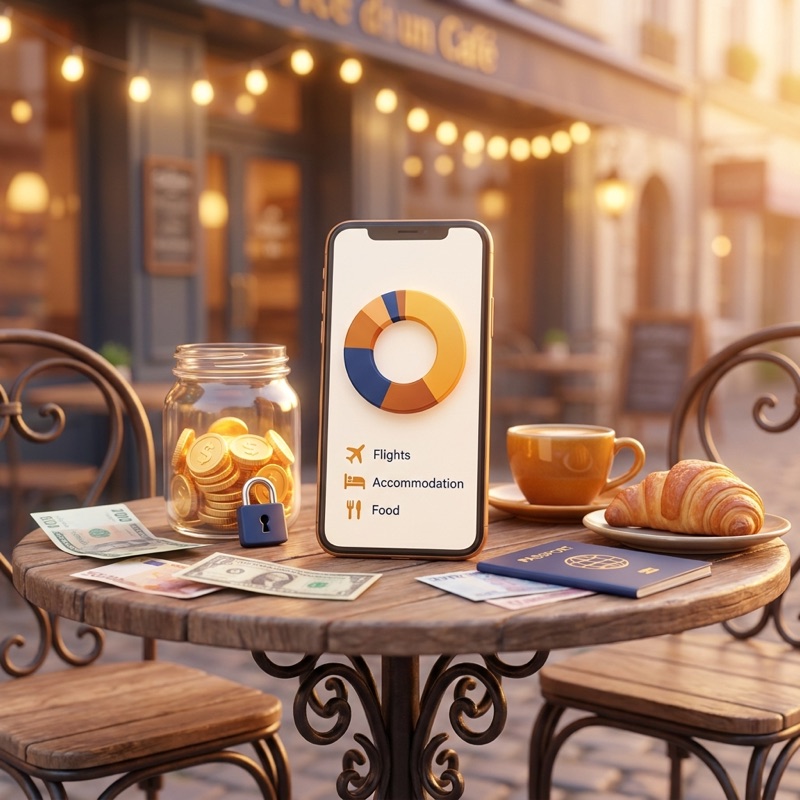
The real killer: the currency fog
Here is the psychology working against you. In a foreign currency, prices stop feeling like money. “14” and “1,400” and “9.50” all read as vaguely reasonable when you cannot instantly translate them to what you would pay at home. Each individual purchase feels fine. The sum is what surprises you, and by then the trip is over.
The fix is not restraint — it is real-time visibility. When you can see, that same evening, that food is running 30% over plan while activities are under, you make one small adjustment and stay on track. The goal was never to spend less on the trip you dreamed about. It was to never be ambushed by the total.
Track as you go, not at the end
The difference between Daniel and a traveler who lands on budget is not discipline. It is timing. Logging expenses at the end of the trip is an autopsy. Logging them as they happen — ten seconds after the coffee, before you have forgotten — is a steering wheel.
This is the part worth automating. TripOverall lets you set a budget per trip and log each expense in seconds, then shows live charts of where your money is going by category. It converts everything using daily European Central Bank exchange rates, so the numbers on screen match what your bank will actually charge — no nasty statement surprises. It even estimates a realistic daily cost for your destination before you go. It is free on iPhone and Android, and it is the quiet difference between coming home glowing and coming home doing math.